

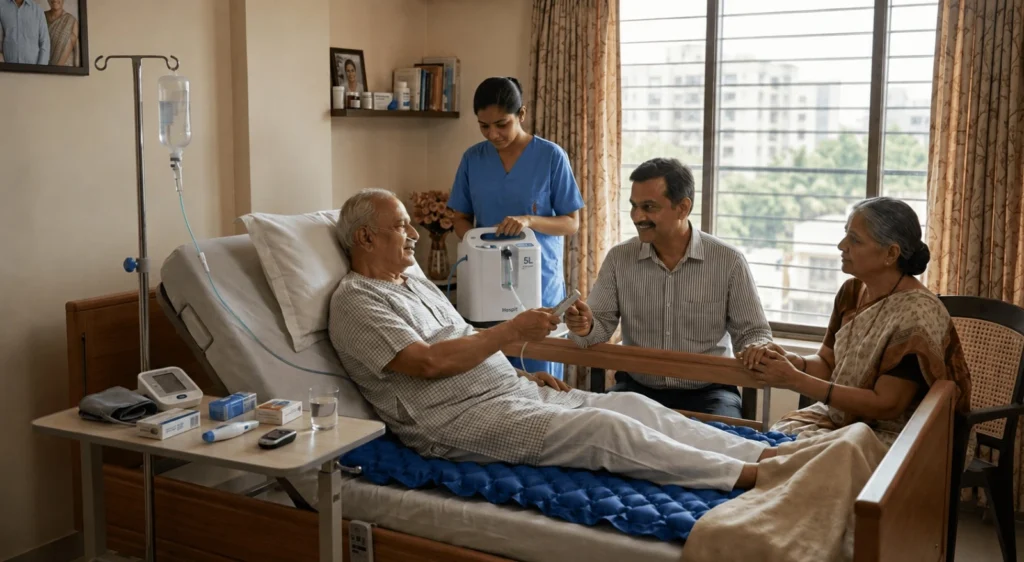
Watching a loved one struggle to catch their breath is one of the most frightening experiences a family can ever endure.Watching a loved one struggle to catch their breath is one of the most frightening experiences a family can ever endure. When the doctor prescribes supplemental oxygen for home use, families often scramble in a panic to figure out the best way to arrange it. While heavy, dangerous oxygen cylinders used to be the only option, today, an oxygen concentrator is the standard of care. This brilliant machine simply plugs into your wall socket, takes in normal room air, filters out the nitrogen, and delivers highly purified oxygen directly to the patient. It is incredibly convenient, but the upfront cost of a good machine is quite high, leaving families wondering if they should buy or rent one.
How do we decide whether to rent or buy — where do we even start?
When evaluating buying versus renting medical equipment, the golden rule is to look at the expected duration of the illness. If a patient is recovering from an acute, temporary illness like a severe chest infection or post-surgery complications, their lungs will eventually heal. In these cases, they might only need the extra oxygen support for a few weeks. Renting an oxygen concentrator is undoubtedly the smartest, most cost-effective path here. However, if your elderly parent has been diagnosed with advanced chronic obstructive pulmonary disease or severe asthma, their lungs will require daily oxygen support for the rest of their lives. In these permanent situations, renting a machine for years becomes a massive financial drain, making buying the much better choice.
Who handles the maintenance and filter replacements — and why does that matter?
Oxygen concentrators contain delicate parts like zeolite sieve beds and internal bacterial filters that slowly wear out over time and need replacement. When you rent a machine, the provider takes full responsibility for changing these filters and servicing the compressor. If the machine stops producing pure oxygen, they replace it immediately. If you buy the machine, you must remember to schedule these routine services yourself and pay for the expensive replacement filters out of your own pocket. For families already managing a complex home care routine, the maintenance-free nature of renting is often worth more than the monthly cost itself.
Do I need a doctor’s prescription to rent or buy an oxygen concentrator?
Yes, medical-grade oxygen is strictly treated as a prescription drug, so you absolutely need a valid prescription from a doctor stating the exact litres per minute the patient requires. Never attempt to self-prescribe the flow rate based on what seems to help — too much or too little oxygen both carry real clinical risks, and the setting must come from the treating physician.
Managing a critically ill patient at home means coordinating medicines, equipment, nursing, and consumables — often from multiple unreliable vendors. Hospit eliminates that burden entirely. From same-day medical equipment delivery and rental to pharmacy, nursing, caretaker support, and Comprehensive Geriatric Assessment — everything comes from one number, one team, and one invoice. Call us or WhatsApp us today to tell us what your loved one needs.
Is it really hygienic to use a rented oxygen concentrator — what about infection risk?
Nobody likes the idea of using a breathing machine that belonged to a stranger. If the patient is highly prone to catching new infections, buying a brand new machine gives the family absolute peace of mind. But if you choose to rent, you should know that professional providers thoroughly sanitise the external and internal parts of the machine. Furthermore, the nasal tubes and face masks that actually touch the patient’s face are always provided brand new and factory sealed. The machine itself is cleaned; the parts that touch the patient are always fresh.
What is the actual difference between an oxygen cylinder and a concentrator?
A cylinder holds a limited, fixed amount of oxygen and needs to be constantly refilled. A concentrator makes its own oxygen continuously from the surrounding room air as long as it has electricity. For daily, long-term use at home, the concentrator is far more practical — but as discussed in earlier guides, keeping a backup cylinder for power cuts remains essential regardless of which option you choose.
Can the concentrator run continuously, or does it need to be switched off at night?
Most high-quality home concentrators are designed to run continuously for twenty-four hours, but it is always good practice to give the machine a rest for thirty minutes a day if the patient’s condition safely allows it. Discuss this directly with the treating doctor — for some patients, even a thirty-minute break is not clinically appropriate, and the machine must run without interruption.
What if a better, quieter model becomes available — are we stuck with what we rented?
Oxygen machines are constantly becoming lighter, smaller, and significantly quieter. If you purchase a bulky machine today, it might feel outdated in a few years when silent, portable models become cheaper. Renting gives you the flexibility to swap your old, noisy machine for a newer, upgraded model, ensuring the patient always has access to the most comfortable and modern care available. For a patient who will need oxygen support for years, sleeping beside a quieter machine is not a trivial quality-of-life improvement — it genuinely affects rest and recovery.
You should not have to act as a hospital administrator while also being a son, daughter, or spouse. Hospit handles the medicines, the equipment, the nurses, the consumables, and the coordination — so you can focus on being present for your loved one. Tell us what your loved one needs and we will take it from there. Call us or WhatsApp us today.