

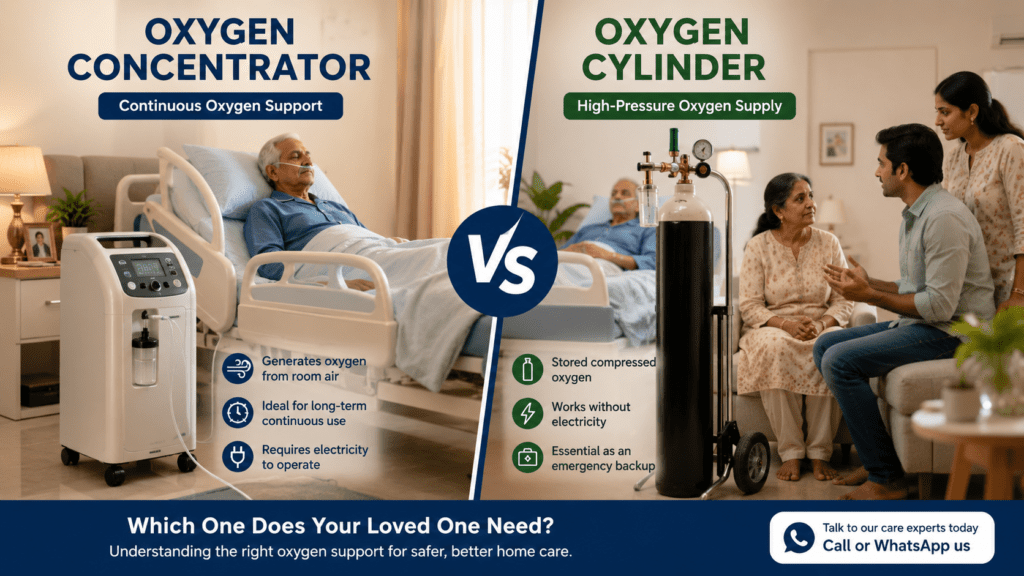
When a loved one is discharged from the hospital to a home ICU setup with a severe lung condition like pneumonia, chronic obstructive pulmonary disease (COPD), or advanced asthma, the doctor’s discharge prescription usually simply says “continuous oxygen therapy.” For an Indian family already exhausted and stressed about the mounting hospital bills, figuring out the technical difference between the various oxygen machines on the market is incredibly confusing. Should you buy a heavy metal cylinder, or should you rent a digital electronic machine? Understanding the distinct medical use case for each device is the absolute key to keeping your loved one breathing safely at home.
So what exactly is an oxygen concentrator, and how does it work?
An oxygen concentrator is a smart, highly advanced electronic medical device that looks a bit like a small plastic suitcase on wheels. It does not actually store any oxygen inside it. Instead, it forcefully pulls in normal room air, filters out all the useless nitrogen, and delivers a continuous, endless stream of 93% pure medical-grade oxygen directly to the patient through a simple plastic nasal tube. Because it actively generates its own oxygen on the spot, it never ever needs to be refilled. This makes it the absolute best and most cost-effective choice for patients who need mild to moderate oxygen support for many hours a day, or even continuously throughout the entire night.
Is it safe to keep a compressed oxygen cylinder inside the house?
Compressed oxygen is completely safe if handled correctly, but it strongly accelerates fire. You must never allow smoking, lit diyas, candles, or gas stoves anywhere near the oxygen cylinder or the concentrator. Treating the cylinder with the same caution you would a kitchen LPG cylinder is a good practical rule of thumb.
Managing a critically ill patient at home means coordinating medicines, equipment, nursing, and consumables — often from multiple unreliable vendors. Hospit eliminates that burden entirely. From same-day medical equipment delivery and rental to pharmacy, nursing, caretaker support, and Comprehensive Geriatric Assessment — everything comes from one number, one team, and one invoice. Call us or WhatsApp us today to tell us what your loved one needs.
If the concentrator never needs refilling, why do we still need an oxygen cylinder at home?
A cylinder is a heavy, thick metal tank filled entirely with highly compressed, pure medical oxygen gas. Unlike a concentrator, it does not require a single drop of electricity to work. You simply turn a metal valve, and high-pressure oxygen flows out instantly.
This specific feature makes the cylinder an absolute lifesaver in two very specific scenarios. First, if you live in an area of Mumbai, Navi Mumbai, or Thane that suffers from unpredictable power cuts, your electronic concentrator will shut off completely during an outage. Having a backup ward cylinder ensures your loved one never stops breathing while you wait for the electricity to return. Second, if the patient faces a sudden, severe respiratory emergency and requires a massive, high-flow rush of oxygen before the local ambulance arrives, a jumbo cylinder can push out oxygen much faster and harder than a standard home concentrator.
Essentially, the oxygen concentrator acts as your daily, long-term workhorse, while the oxygen cylinder acts as your highly reliable, electricity-free emergency backup plan.
How do I know when the oxygen cylinder is running empty?
The medical regulator attached to the top of the cylinder has a small pressure gauge dial. When the needle drops deeply into the red zone near zero, you must call your vendor for a doorstep refill exchange immediately. Never wait until the cylinder is fully empty — by the time the needle hits zero, your window to arrange a safe replacement has already closed.
Can we use the oxygen concentrator if we need to take our loved one to the hospital?
Standard home concentrators are meant to stay securely plugged into a wall outlet. For hospital visits in a car or taxi, a small, portable ward oxygen cylinder or a specialised battery-operated portable oxygen concentrator is strictly required. This is an important detail to plan for in advance, especially for patients who need regular follow-up visits with their treating doctor.
You should not have to act as a hospital administrator while also being a son, daughter, or spouse. Hospit handles the medicines, the equipment, the nurses, the consumables, and the coordination — so you can focus on being present for your loved one. Tell us what your loved one needs and we will take it from there. Call us or WhatsApp us today.