

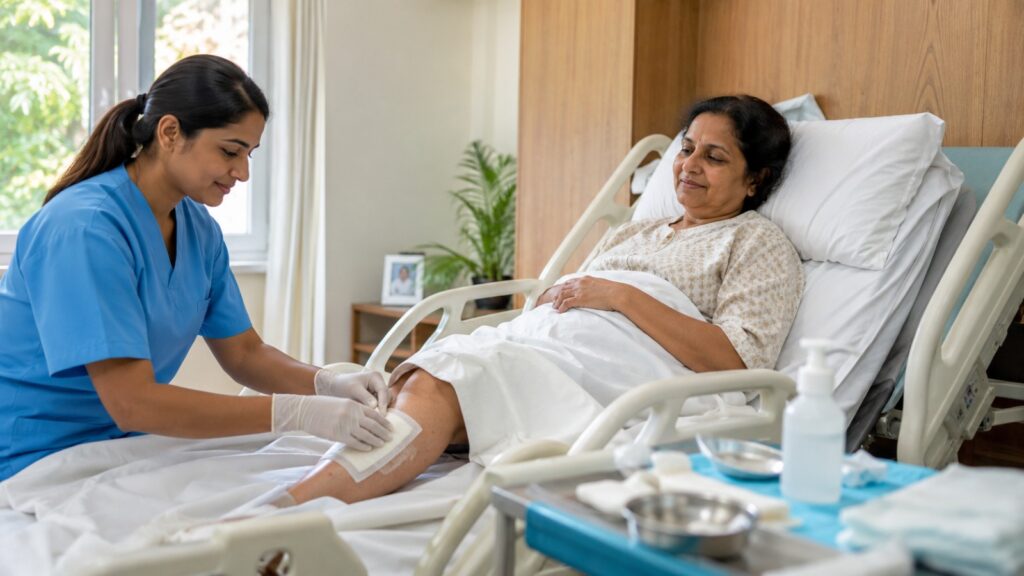
When an elderly grandparent is brought home after a severe stroke, the family’s primary focus is almost always on their breathing and feeding. However, one of the most dangerous and hidden threats to a bedridden patient lies quietly right underneath them. When a weak person lies completely flat in the exact same position for days, the heavy weight of their own body cuts off the healthy blood supply to their skin. Within just a few short days, the delicate skin over their tailbone, hips, and heels can break down, forming deep, incredibly painful wounds officially called bedsores. Preventing and treating these decubitus ulcers requires immense daily patience and a dedicated cabinet full of specialised supplies.
How often do we need to turn the patient — and does it really make that much difference?
A completely bedridden patient must be gently turned from their flat back to their left side, and then later to their right side, strictly every two hours around the clock to keep the healthy blood flowing to all areas of the skin. Setting a phone alarm for every two hours through the night feels exhausting — but it is far less exhausting than managing a deep, infected bedsore wound for weeks on end.
What do we apply to the skin every day to stop bedsores from forming in the first place?
The very first line of defence in your home ICU is heavy skin protection. Normal cosmetic body lotions are absolutely useless for a completely bedridden patient. After the daily sponge bath with gentle wet wipes, the family caregiver or nurse must apply a thick, white layer of medical-grade zinc oxide barrier cream heavily over the vulnerable pressure points. This thick cream acts exactly like a waterproof shield, protecting the fragile, papery skin from acidic sweat and accidental diaper leaks. For elderly patients at very high risk, doctors often suggest using specialised soft foam pads securely strapped under the heels and elbows to heavily reduce the rough friction against the bedsheets.
Can an alternating pressure air mattress actually help prevent and heal bedsores?
Yes, a medical air mattress that constantly shifts its inflated air bubbles is highly recommended by doctors to instantly relieve the heavy, painful pressure on existing bedsores and safely stop brand new ones from forming. For any patient who is fully immobile, an alternating pressure mattress is not an optional luxury — it is a frontline clinical tool that works around the clock even when the family is asleep.
Managing a critically ill patient at home means coordinating medicines, equipment, nursing, and consumables — often from multiple unreliable vendors. Hospit eliminates that burden entirely. From same-day medical equipment delivery and rental to pharmacy, nursing, caretaker support, and Comprehensive Geriatric Assessment — everything comes from one number, one team, and one invoice. Call us or WhatsApp us today to tell us what your loved one needs.
A bedsore has already developed — how do we clean it properly without making it worse?
If a bedsore does unfortunately develop despite your best efforts, cleaning the open wound properly is critical. You should never use harsh household liquid antiseptics or raw tap water on an open bedsore, as these can actually burn the raw tissue and severely delay healing. Instead, the home care nurse will need large, heavy plastic bottles of sterile normal saline to gently wash the dead tissue and bacteria away safely. The instinct to use a strong antiseptic to “kill the germs” is understandable but counterproductive — saline cleans without damaging the fragile new tissue trying to form.
What dressings and tapes do we need — and why does the choice of tape actually matter?
After cleaning, the wound must be carefully and completely covered. Standard cotton wool and cheap sticky tapes will only cause much more damage to the patient. When you pull off cheap tape, it often violently tears the healthy surrounding skin right off. Therefore, you must use specialised paper micropore tapes that peel off very gently. The nurse will also require thick, sterile gauze pads to safely soak up any natural fluid leaking from the wound.
For much more advanced or deeper bedsores, doctors frequently prescribe highly expensive hydrocolloid dressings or silver-infused patches. These modern medical dressings act like an artificial second skin — they actively keep harmful room bacteria out while trapping the body’s natural healing moisture inside, allowing the deep tissue to repair itself much faster. Treating a bad bedsore is a very slow, frustrating marathon, but having a constant stock of high-quality, sterile dressings gives your loved one the absolute best possible chance to heal comfortably.
How do we know if a bedsore has become infected — what should we watch for?
If the open wound starts smelling unusually bad, leaks thick yellow or green pus, or the surrounding skin becomes very hot and angry red, it is highly likely infected, and you should strictly contact your treating doctor immediately. An infected bedsore in an already weakened patient can escalate to a systemic infection very rapidly — this is not a situation to monitor at home for a day or two before calling for help.
You should not have to act as a hospital administrator while also being a son, daughter, or spouse. Hospit handles the medicines, the equipment, the nurses, the consumables, and the coordination — so you can focus on being present for your loved one. Tell us what your loved one needs and we will take it from there. Call us or WhatsApp us today.