

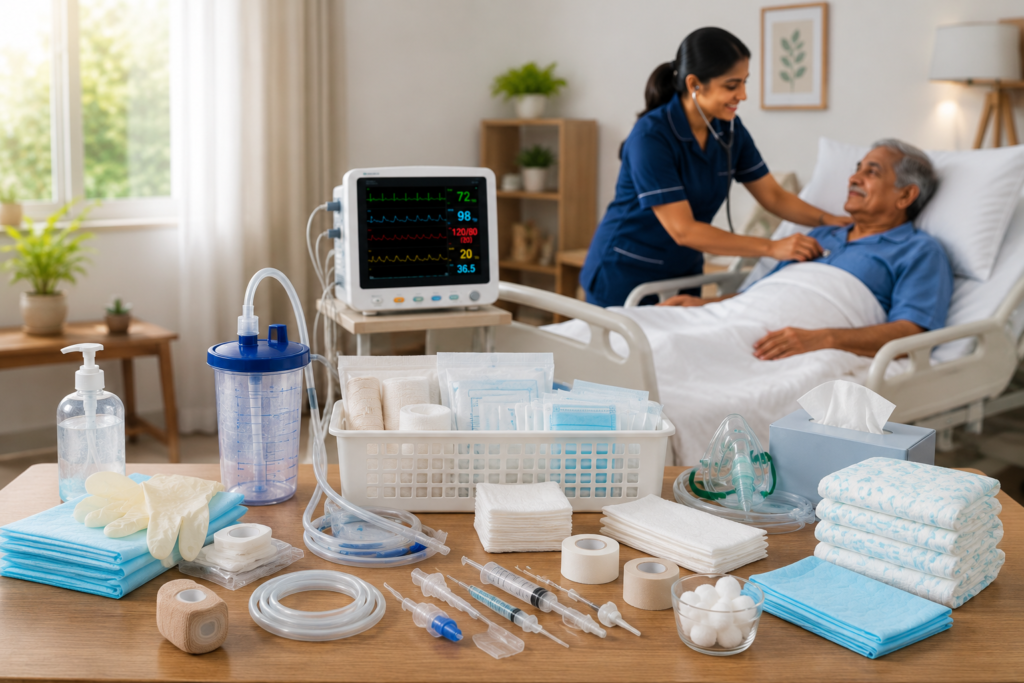
Meet the Mehta family. When they finally brought their beloved grandmother home after a long stay in the intensive care unit, they felt a massive wave of relief. They had successfully rented the heavy motorised bed, the oxygen machine, and the shiny patient monitor. The big, expensive hurdles were finally behind them. However, on the very first morning at home, the day-shift nurse handed Mr. Sharma a long, handwritten list. It included things like suction catheters, a specific size of adult diapers, sterile surgical gloves, 60ml syringes, and specialised medical tape. He spent his entire Sunday running from one local chemist to another, realising that the big machines were just the skeleton of a home ICU. The real heartbeat of daily care lies in the endless stream of medical consumables.
So what exactly are medical consumables — and why do they matter as much as the machines?
While heavy machines like beds and monitors stay in the room permanently, medical consumables are all the disposable, single-use items that are constantly used and thrown away. In a hospital, families never notice these items because the nurses simply fetch them from a massive supply closet down the hallway. But in a home care setting, the family becomes the sole manager of that supply closet. Running out of a basic item like a feeding syringe or an oxygen mask at midnight can quickly escalate into a highly stressful medical emergency. To prevent caregiver panic, you must understand the different categories of supplies you will need to buy in bulk.
How do we keep our loved one clean and prevent skin infections when they cannot get out of bed?
When a patient is completely bedridden, their basic bathroom needs must be managed safely to prevent severe skin infections. This category requires the highest volume of purchases. You will go through massive quantities of highly absorbent adult diapers every single day. Alongside diapers, you need disposable bed underpads, often called chuck pads, which are placed directly under the patient to protect the expensive hospital mattress from accidental leaks. Gentle, alcohol-free wet wipes are also essential for daily sponge baths, as regular bathing is often impossible. Keeping the patient clean and dry is the first line of defence against painful skin breakdowns.
What respiratory supplies does the nurse need if our loved one is on oxygen or has a tracheostomy?
If your loved one requires oxygen or uses a suction machine to clear their throat, you will need a steady supply of clean respiratory plastics. The thin nasal tubes that deliver oxygen, known as nasal prongs, and the soft plastic oxygen masks need to be replaced regularly because they gather moisture and bacteria. If the patient has a tracheostomy tube in their neck, the nurse will need dozens of sterile suction catheters every single week to safely vacuum out thick mucus without introducing new lung infections. Never reuse these cheap plastic tubes to save a few rupees — it is incredibly dangerous for the patient.
Managing a critically ill patient at home means coordinating medicines, equipment, nursing, and consumables — often from multiple unreliable vendors. Hospit eliminates that burden entirely. From same-day medical equipment delivery and rental to pharmacy, nursing, caretaker support, and Comprehensive Geriatric Assessment — everything comes from one number, one team, and one invoice. Call us or WhatsApp us today to tell us what your loved one needs.
Our loved one cannot swallow food — what supplies do we need for tube feeding?
Many critical patients cannot swallow solid food safely and are fed a strict liquid diet through a thin tube that goes through their nose directly into their stomach. This is called a Ryle’s tube. To push the liquid food and crushed medicines down this tube, the nurse requires large, specialised sixty-millilitre feeding syringes. You will also need to purchase heavy tins of medically prescribed nutritional formula powders. These formulas provide the exact balance of proteins, vitamins, and calories the patient needs to heal, replacing traditional meals entirely.
What do we need to treat and prevent bedsores at home?
Lying in the exact same position for days causes the skin over the tailbone and heels to break down, forming deep, painful wounds known as bedsores. To treat and prevent these, your home medical kit must include specialised barrier creams, sterile gauze pads, cotton rolls, and paper micropore tapes that do not tear the delicate skin when removed. Advanced hydrocolloid dressings are also frequently prescribed to help deep wounds heal faster while keeping bacteria out.
Our loved one is receiving IV fluids and antibiotics at home — what supplies does that require?
If your loved one is receiving antibiotics, painkillers, or hydration fluids directly into their veins at home, you are dealing with intravenous or IV supplies. This includes the small plastic IV cannulas inserted into the hand, the long plastic IV tubing sets, and heavy plastic bottles of normal saline. To keep the injection sites perfectly clean and prevent dangerous bloodstream infections, the nurse will constantly ask for small, individually wrapped alcohol swab pads and sterile transparent IV fixing tapes.
Why do we need so many gloves — and what else do we need to keep the room as clean as a hospital?
A home ICU must remain as clean as a hospital room. Anyone touching the patient, changing their diapers, or handling their feeding tubes must do so with clean hands. You will need boxes of disposable examination gloves, sterile surgical gloves for delicate procedures like suctioning, high-quality face masks for visitors, and plenty of medical-grade hand sanitiser. Buying these general supplies in bulk ensures your family is always prepared to provide safe, loving care without the constant stress of running out.
Nurses and family members must use fresh gloves every single time they handle feeding tubes, clean wounds, or use a suction machine to strictly prevent cross-infection and keep the weak patient safe from household germs. There are no shortcuts here — a single pair of reused gloves is a direct path to a preventable infection.
Can we wash and reuse suction catheters or feeding syringes to save money?
No. These plastic medical items are strictly designed by manufacturers for single use only. Washing them with soap does not remove microscopic bacteria, and reusing them can cause severe, life-threatening infections. The cost of a box of fresh catheters is negligible compared to the cost — financial and emotional — of treating a hospital-acquired lung infection in an already critically ill patient.
How do we safely dispose of used medical waste at home?
Keep a dedicated, heavy-duty garbage bag specifically for medical waste like soiled diapers, used tubes, and bloody gauze. Tie it very securely before disposing of it with your regular daily trash to maintain a highly hygienic environment. Mixing medical waste loosely with household rubbish is both a hygiene risk and a safety hazard for anyone handling the garbage afterwards.
You should not have to act as a hospital administrator while also being a son, daughter, or spouse. Hospit handles the medicines, the equipment, the nurses, the consumables, and the coordination — so you can focus on being present for your loved one. Tell us what your loved one needs and we will take it from there. Call us or WhatsApp us today.