

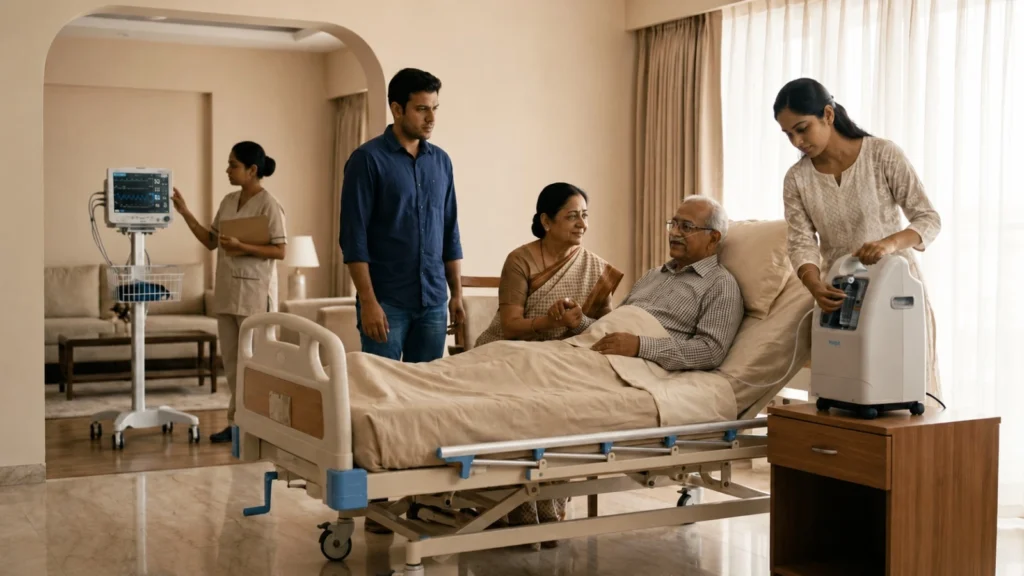
Meet the Kapoor family. Last month, their beloved grandfather had a severe respiratory infection that landed him in the hospital for two weeks. When the doctor finally announced that he could go home, the family was overjoyed. However, that joy quickly turned into sheer panic when the discharge nurse handed them a long piece of paper. It was a list of medical items they needed to arrange at home, including a motorised bed, an oxygen machine, and a patient monitor. Mr. Kapoor, the eldest son, stood in the hospital corridor frantically searching the internet on his phone, completely confused. Should he spend a fortune buying all these bulky machines, or should he just rent them? This overwhelming scenario is something almost every Indian family faces when bringing a sick loved one home from the hospital.
The magnitude of this problem in India is massive. With our rapidly ageing population and the increasing preference for recovering in the comfort of one’s own home, millions of families are suddenly forced to become amateur hospital administrators. Studies suggest that the demand for home healthcare and medical equipment in India is growing by over twenty percent every single year. Yet, there is very little clear guidance available for ordinary people. Families are often left at the mercy of local surgical shops, spending thousands of rupees unnecessarily on equipment they might only need for a few weeks, or conversely, renting a machine for years when buying it outright would have been far cheaper.
What do renting and buying actually mean — and how do we even begin to decide?
Medical equipment for home care refers to any reusable device that helps a patient manage an illness or recover from an injury. When we talk about renting, it means you pay a fixed monthly or weekly fee to use the machine, and the provider takes it back when you no longer need it. Buying means you pay the full price upfront, and the machine belongs to you permanently. Both options have their own distinct advantages, but the right choice depends on three major factors: the duration of the illness, the risk of maintenance, and the emotional comfort of the patient.
How long will our loved one actually need the equipment — does that change the answer?
The very first question you must ask your doctor is how long the patient will actually need the equipment. If your mother is recovering from a knee replacement surgery, she might only need a specialised bed or a walker for two to three months. In such short-term scenarios, renting is always the smartest financial decision. You pay a fraction of the cost, and once she is walking again, you do not have to worry about a huge, heavy bed gathering dust in your spare bedroom. On the other hand, if a family member has been diagnosed with a chronic, lifelong condition like severe sleep apnea or advanced lung disease, they will need their machine every single night for years. In these long-term cases, the monthly rental fees will eventually add up to more than the actual cost of the machine, making purchasing the far better choice.
What happens if the machine breaks down — who is responsible for repairs?
Another huge factor that families often forget to consider is the headache of maintenance and repairs. Medical machines have sensitive parts, motors, and filters that need regular servicing. According to the Indian guidelines on home ICU setups, using well-maintained, properly calibrated, and validated equipment is absolutely essential for patient safety. When you rent from a reliable provider, they take on the entire burden of maintenance. If a machine breaks down at two in the morning, a good rental service will quickly replace it with a working unit. If you buy the machine, you are solely responsible for finding a technician, paying for expensive spare parts, and dealing with the stress of the warranty period.
Managing a critically ill patient at home means coordinating medicines, equipment, nursing, and consumables — often from multiple unreliable vendors. Hospit eliminates that burden entirely. From same-day medical equipment delivery and rental to pharmacy, nursing, caretaker support, and Comprehensive Geriatric Assessment — everything comes from one number, one team, and one invoice. Call us or WhatsApp us today to tell us what your loved one needs.
Is it really hygienic and safe to use a machine that another sick person has used before?
Hygiene is a very common concern for Indian families. Many people feel uncomfortable with the idea of their loved one using a machine that another sick person previously used. It is a completely valid emotional concern. However, professional healthcare providers follow incredibly strict sanitisation and fumigation protocols. Before any rented equipment is sent to a new home, it is thoroughly cleaned with medical-grade disinfectants, and items like oxygen masks or breathing tubes are always provided brand new and sealed. If the thought of a rented machine still makes your family too anxious, or if the patient has a highly compromised immune system, buying brand new equipment will provide the ultimate peace of mind.
Will health insurance cover any of these costs?
Some specialised health insurance policies do cover the cost of home care equipment, especially if it is strictly prescribed by a doctor following a hospital discharge. You should always check your specific policy documents. It is worth making this call to your insurance provider on the same day you receive the discharge summary — not after the equipment has already been arranged.
What if the equipment becomes outdated — are we stuck with an old machine?
Medical devices are constantly being upgraded with better sensors, quieter motors, and more comfortable designs. If you purchase an expensive piece of equipment today, it might become completely outdated in just three years. Renting gives you the flexibility to upgrade to a newer, more advanced model whenever you want, ensuring your loved one always has access to the best possible care without having to buy a brand new machine all over again. For families managing a chronic condition over many years, this flexibility alone can make renting the more practical long-term choice.
What if a rented machine stops working suddenly — what do we do?
A reliable healthcare provider will immediately send a technician to repair the device or replace the broken machine with a working one, ensuring the patient’s care is never interrupted. Before finalising any rental, always ask your provider directly: what is their guaranteed response time for a breakdown at midnight? The answer will tell you everything you need to know about whether they are the right partner for your family.
You should not have to act as a hospital administrator while also being a son, daughter, or spouse. Hospit handles the medicines, the equipment, the nurses, the consumables, and the coordination — so you can focus on being present for your loved one. Tell us what your loved one needs and we will take it from there. Call us or WhatsApp us today.